

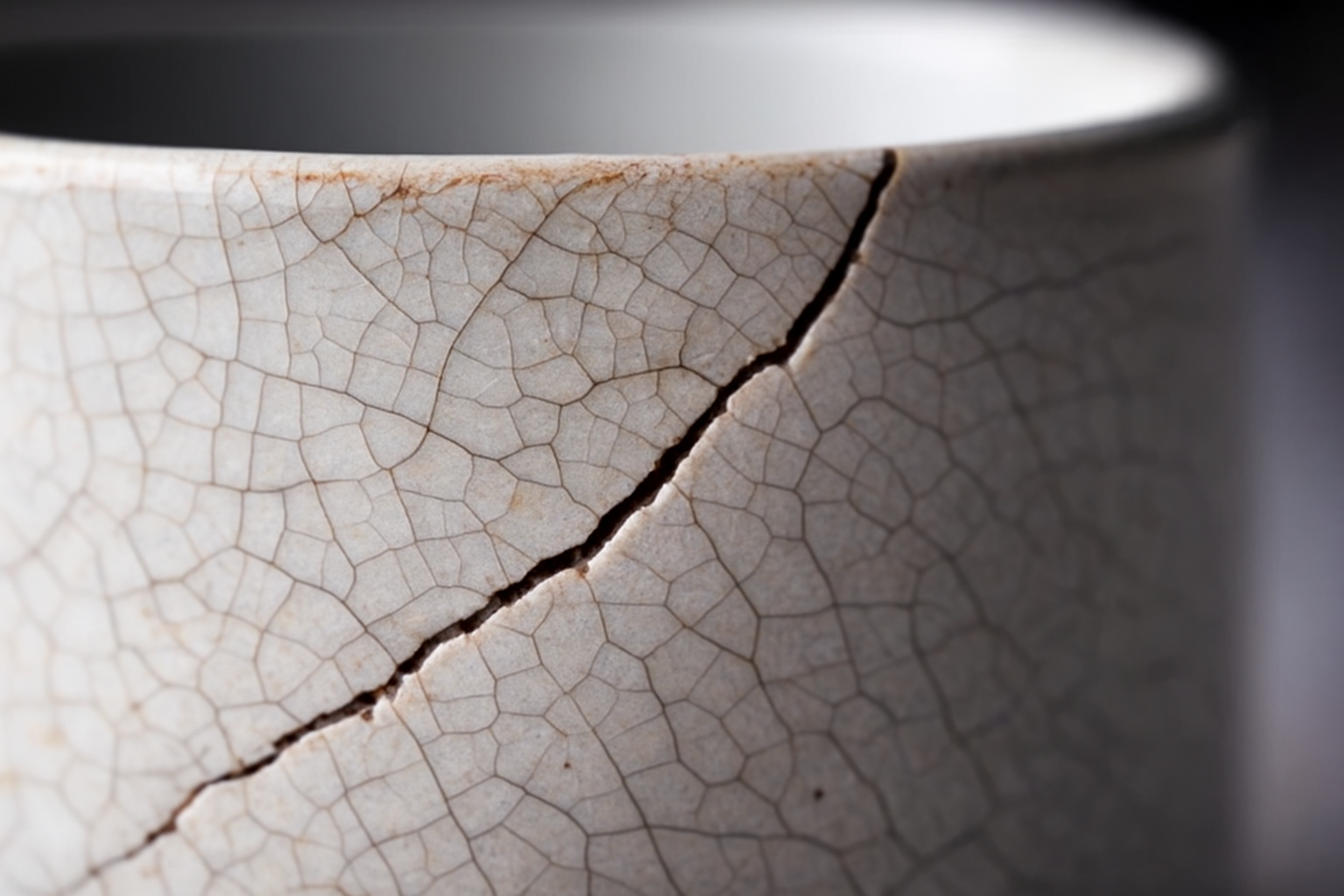
Glaze cracking is a common problem in ceramics, tiles, pottery — and understanding its causes helps avoid defects, improve durability, and maintain aesthetics. Several interconnected factors contribute to glaze cracks.
1. Mismatch between glaze and body (Thermal / shrinkage mismatch)
-
The most frequent cause is that the glaze and the ceramic body (clay) expand and contract at different rates during firing and cooling. If the glaze shrinks more (or less) than the body as the piece cools down, stresses build up. When these stresses exceed what the glaze can withstand, it cracks.
-
This phenomenon is often known as Crazing — a network of fine cracks across the glazed surface.
-
In some cases, the mismatch comes from using a glaze with a high coefficient of thermal expansion (e.g. glazes rich in fluxes like sodium, potassium) over a clay body that has a lower expansion rate (e.g. dense stoneware or porcelain).
2. Improper firing / cooling process
-
If the kiln temperature is not correctly controlled — for example, if the kiln is cooled too quickly after firing — the glaze may cool and harden faster than the body. The body continues to shrink after the glaze has hardened, which can tug on the glaze and cause cracks.
-
Overfiring (or under-firing) can also disturb the proper development of glaze-body fit. Overfiring may change the structure of the clay (e.g. melting silica), altering its thermal expansion properties, which later leads to mismatch and cracking.
3. Thickness and application of the glaze
-
If the glaze layer is applied too thickly (or, in some cases, too thinly), this can lead to problems. A thick glaze may shrink more (or differently) than the underlying body, increasing stress and the likelihood of cracks.
-
Uneven thickness — for instance, uneven application or inconsistent drying — can also cause local stress concentrations that lead to cracks or detachment.
4. Moisture absorption and environmental effects (Long-term causes)
-
Even if a glazed piece comes out of the kiln without cracks, it may develop them over time. If the ceramic body is porous, it can absorb moisture from the environment; this causes the body to expand slightly, while the rigid glaze resists expansion — producing stress that eventually causes cracks.
-
Additionally, repeated heating and cooling cycles during the use of ceramic wares (e.g. pouring hot liquid into a cold mug, then washing in cold water) may induce thermal shock and gradual stress accumulation → eventual crazing.
5. Quality of raw materials and glaze composition
-
Low-quality or inappropriate raw materials (e.g. clays or frits with unsuitable shrinkage or unused hydrated additives) may lead to improper glaze fit, uneven drying or firing behavior, contributing to cracks.
-
For instance, some materials may retain water, or their slurry may have high surface tension, causing defects such as “crawling” (where glaze retracts in patches, leaving bare spots) rather than smooth even glaze coverage.
6. Mechanical stress, handling, and usage
-
After production, improper use — such as abrupt temperature changes (e.g. pouring cold water on a hot ceramic, or vice versa), dropping, hitting, or scraping with metal utensils — can add stress to glaze and gradually produce cracks.
-
Over time, even small surface cracks may deepen and propagate under repeated mechanical or thermal stress, compromising the strength and integrity of the ceramic.
Prevention and Best Practices
Based on the above causes, producers and users can take steps to minimize the risk of glaze cracking:
-
Carefully match glaze formulation and clay body — ensure compatible thermal expansion coefficients. Use glazes designed for the specific clay body.
-
Apply glaze in a consistent, appropriate thickness. Avoid overly thick or uneven glaze layers.
-
Control the kiln firing schedule: use appropriate peak temperature, allow sufficient “heatwork,” and cool slowly (avoid rapid cooling) to let glaze and body shrink together smoothly.
-
Use good quality raw materials (clay, frits, glaze components) with known and stable properties.
-
After firing, avoid sudden temperature changes in use; do not immerse hot ceramics directly into cold water (or vice versa). Handle gently, avoid heavy impacts or metal-on-glaze scraping.
-
For porous ceramic bodies, consider sealing or vitrifying body to reduce moisture absorption; store and use in stable humidity/temperature conditions.
Why glaze cracking matters (risks & effects)
-
Even fine cracks may allow moisture, dirt, or bacteria to penetrate into the body — a serious concern if the ceramic is used for food or drink.
-
Cracks degrade aesthetic quality: what should be a smooth glossy surface turns into a network of fine lines, spoiling appearance.
-
Over time, cracks may worsen, potentially compromising structural integrity — leading to chipping, flaking, or even breakage under stress.
Conclusion
Glaze cracking (or “enamel cracking”) is rarely the result of a single factor. Rather, it’s the outcome of a combination of material mismatch, improper glaze or firing procedures, environmental stress, and sometimes use-related wear. For a ceramic producer or hobbyist, the key to preventing cracks is ensuring harmony among all parts of the production process — from raw materials and glaze chemistry, through careful application and firing, to post-production handling and use.
