

-
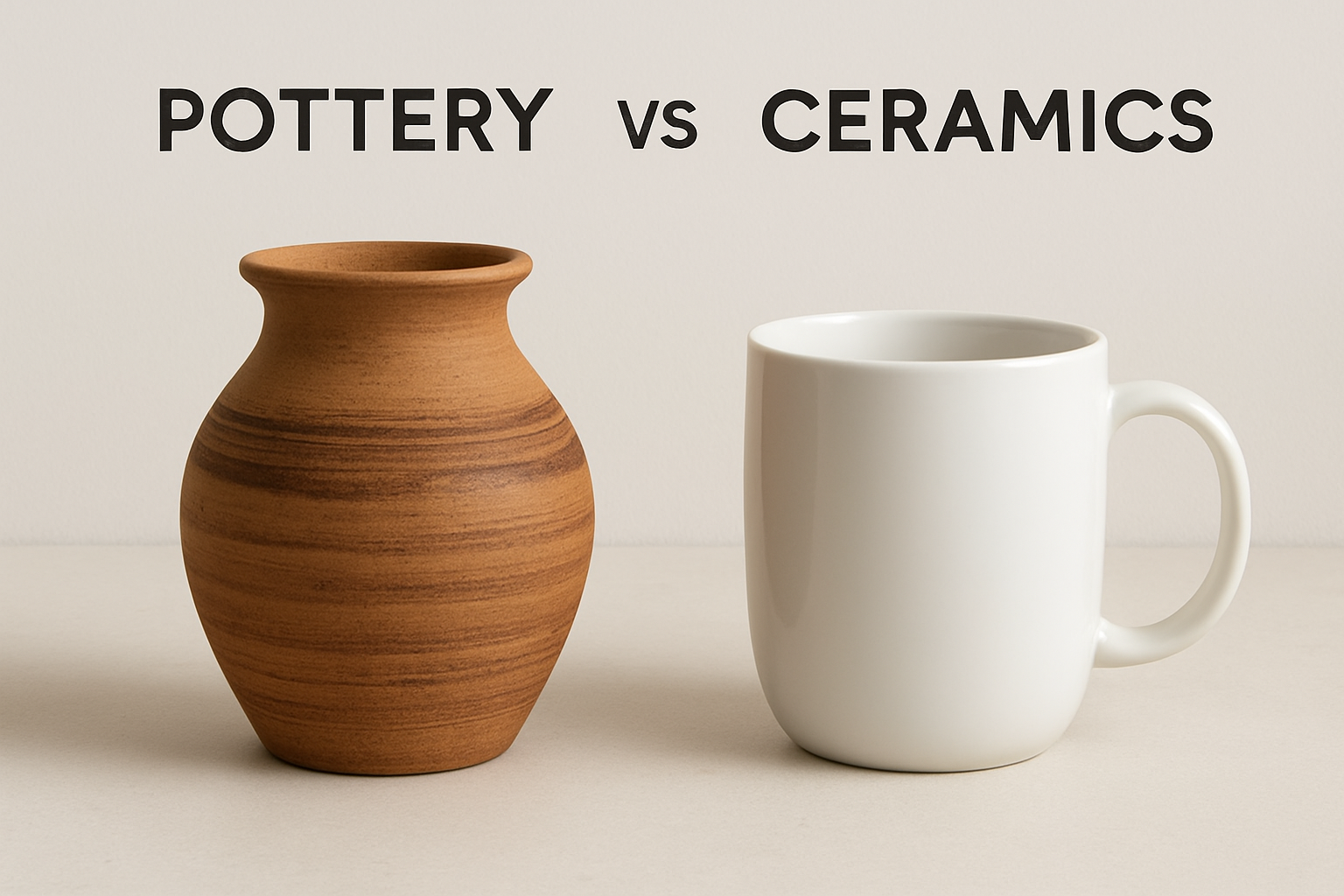
Ceramics is a broad term covering all items made from inorganic, non-metal, non-organic materials that are shaped (often from clay or similar) and then hardened by heat (firing).
-
Pottery refers more specifically to objects made from clay that are shaped (by hand, wheel, or simple molds) and then fired — typically objects like bowls, mugs, vases, and other clay vessels.
In short: pottery is a subset of ceramics. All pottery is ceramics, but not all ceramics qualify as pottery.
Key Differences: Scope, Materials and Use
Here’s a breakdown of the main differences between ceramics (in general) and pottery.
| Aspect | Ceramics | Pottery |
|---|---|---|
| Scope & Definition | Very broad — includes any inorganic, non-metallic materials hardened by heat; ranges from traditional clay items (plates, tiles) to advanced industrial ceramics (insulators, technical ceramics, medical implants, etc.). | Narrower — refers specifically to clay-based vessels and objects shaped by traditional methods (hand, wheel, molds), then fired. |
| Materials Used | Can include pure clay-based bodies, but also non-clay inorganic materials (e.g. alumina, zirconia, silicon-carbide) in high-tech or industrial ceramics. | Primarily natural clay (earthenware, stoneware, porcelain clay) — traditional pottery almost always clay-based. |
| Production Techniques | Wide variety: traditional hand-forming or molding, but also industrial techniques — slip casting, injection molding, extrusion, mass production, even advanced manufacturing for technical ceramics. | Usually handcrafted: hand-building, wheel-throwing, or simple molds — emphasizing artisan skill, tradition, manual shaping. |
| Applications / Uses | Very broad: from everyday household items (dishes, tiles) to industrial, technological, medical, structural — depending on composition. | Mostly functional or decorative household objects: bowls, mugs, vases, decorative clay vessels — sometimes artistic/sculptural, but usually simpler and more traditional use. |
Why the Confusion — and Why It Matters
-
Because pottery and many everyday clay-based items are common in daily life (cups, plates, tiles), people often use the terms “pottery” and “ceramics” interchangeably.
-
But technically, the distinction helps: when someone says “ceramics,” they could mean any fired inorganic object — from a simple clay vase to a high-tech ceramic insulator in electronics. “Pottery,” by contrast, evokes the traditional craft of shaping clay vessels, often by hand.
-
Understanding the difference clarifies: if you talk about “ceramic tile,” “ceramic insulator,” “ceramic bone-china,” or “engine ceramics,” you refer to broad ceramic materials — not necessarily hand-crafted “pottery.”
Relationship Between Pottery and Ceramics — The Hierarchy
-
Ceramics — the overarching category: all non-metallic, inorganic materials hardened by heat.
-
Pottery — a subcategory of ceramics: clay-based objects shaped and fired, usually for functional or decorative use.
-
Inside Pottery → there are further types depending on clay type and firing: e.g. earthenware, stoneware, porcelain.
So structurally: Pottery ⊂ Ceramics.
Conclusion
While in everyday conversation “pottery” and “ceramics” may seem synonymous, there is a technical difference: ceramics is a large, inclusive category of fired inorganic materials (ranging from clay dishes to industrial components), while pottery refers specifically to clay-based vessels and objects shaped by traditional (often handmade) methods. Recognizing this helps in understanding materials, manufacturing, and use contexts — whether you’re making clay pots, buying tiles, or studying material science.
